Complete network infrastructure refresh delivered 99.9% uptime and reduced patient portal load times
A private medical practice with four doctors and numerous support staff was experiencing chronic connectivity issues that directly affected patient care. Slow internet and unreliable network connections meant patient portal access frequently timed out, appointment reminders weren't delivered promptly, and clinical staff struggled to access lab results and medication databases.
In healthcare, every minute of downtime potentially means delayed diagnoses, unhappy patients, and frustrated staff—all unacceptable outcomes for a practice committed to quality care.
| Client Profile | Private medical practice with 4 doctors and 8 support staff |
|---|---|
| Industry | Healthcare — Outpatient Medical Services |
| Patients Served | Approximately 1,200 registered patients with daily appointments |
| Critical Applications | Patient portal, electronic medical records, lab integration, telehealth, appointment scheduling |
| Existing Network | Five-year-old switches, limited wireless coverage, single internet provider, no redundancy |
| Uptime Before Project | Averaging 85-90% with frequent outages lasting hours |
| Uptime After Project | 99.9%+ with no unplanned outages in six months |
| Application Performance Improvement | Page load times reduced from 10+ seconds to under 2 seconds |
The practice's network infrastructure dated back over five years and had reached the end of its useful life. Symptoms of failure were becoming frequent and predictable:
Internet connectivity would drop unexpectedly during critical times—like when the reception team needed to send confirmations or when a doctor was consulting a patient remotely. Wireless coverage was spotty, creating dead zones in consultation rooms where staff couldn't access email or systems while waiting for patients. Patient portal timeouts were a common complaint, frustrating both staff trying to check lab results and patients attempting to book appointments online. The single internet provider meant any outage left the entire practice disconnected until the carrier sent a technician. There was no network segmentation, so a virus on one workstation could potentially spread across all systems.
Each outage rippled through the practice: delayed confirmations meant missed appointments, inability to access lab results meant repeat blood draws, slow telehealth meant longer wait times, and overall staff morale suffered from the constant tech headaches. Patients were starting to ask if the practice was competent enough to handle their health matters when they couldn't even provide reliable technology service.
We designed and implemented a modern, resilient network infrastructure tailored to healthcare requirements, with focus on uptime, speed, and security:
Network Hardware Refresh: Replaced all switches with enterprise-grade PoE+ switches supporting Voice over IP phones and wireless access points. Installed managed switches with VLAN segmentation separating clinical systems, guest Wi-Fi, visitor phones, and general staff devices to contain any potential security breaches.
Wireless Upgrade: Deployed new wireless access points strategically positioned to cover every consultation room, waiting area, and staff workspace. Configured band steering to keep devices on optimal frequency, set up guest SSID with captive portal and bandwidth limiting to ensure clinical traffic always has priority.
Redundant Internet Connectivity: Connected two separate internet providers with automatic failover router that seamlessly switches to backup connection when primary fails, tested and validated failover switching completes within 30 seconds.
Firewall and Security: Installed next-generation firewall with intrusion prevention, application control, and regular rule audits. Configured to block known malicious domains and filter suspicious traffic while allowing legitimate healthcare-related services.
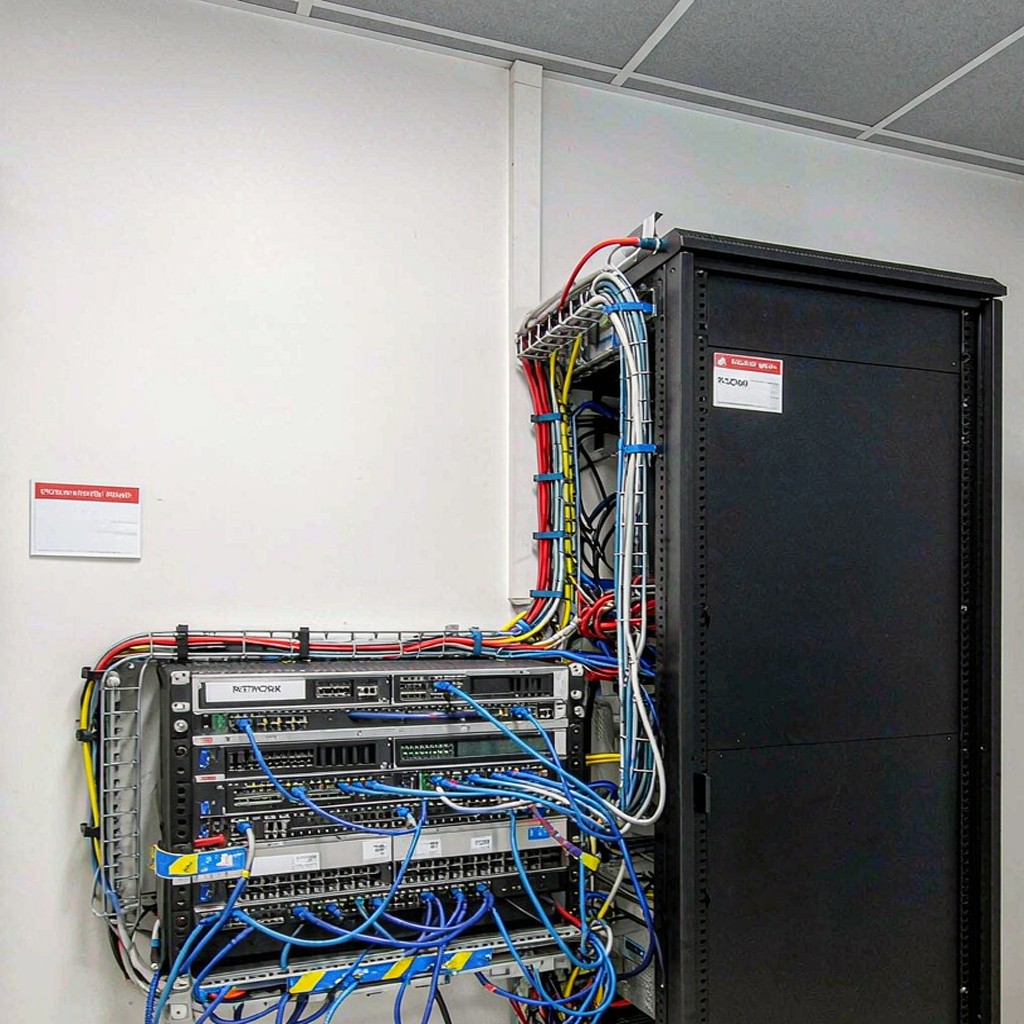
Structured Cabling: Completely rewired network drops to all walls and workstations using Category 6A cabling supporting 10Gbps throughput. Organised cable management for clean runs and easy future modifications.
Monitoring and Management: Implemented network monitoring that tracks uptime, identifies bottlenecks, sends alerts for issues before they affect users, and provides historical data for capacity planning. Set up remote administration capability for quick troubleshooting without onsite visits for minor issues.
Given that this was an active medical practice with patients arriving daily, we planned the network upgrade over four days with minimal disruption:
Day 1 — Preparation and Non-Critical Upgrades: Documented existing network topology, labelled all cables and ports, upgraded internet connections to new providers, installed firewall and monitoring equipment, set up redundant power supplies.
Days 2-3 — Weekend Cutover: Utilised weekend window to swap network hardware. Installed new switches, access points, and cabling. Configured VLANs, wireless settings, and failover. Ran stress tests with heavy traffic simulation.
Day 4 — Final Integration and Testing: Connected all phones, computers, and peripherals to new network. Verified all applications accessible including EMR, lab systems, and patient portal. Conducted wireless roaming tests between all locations. Trained IT staff on new equipment basics.
The network modernisation fundamentally improved the practice's ability to deliver care:
Patient portal access is now instant rather than painfully slow. Appointment confirmations go through reliably. Lab results appear in staff systems without delay. Telehealth consultations proceed smoothly. And perhaps most importantly, staff aren't constantly fighting with technology—they can focus on what they do best: caring for patients.
"We've never had an internet outage that affected patient care since this upgrade. Patients don't realise how bad it was before—they just appreciate that everything works when they need it to. That's worth far more than the cost of the project itself."
Practice Manager, HealthFirst Clinic