Comprehensive audit and restructuring delivered 35% cloud cost reduction while maintaining performance standards
An online retail business operating on Microsoft Azure was seeing cloud costs rise faster than revenue. Without visibility into what resources were running and why, expenses had grown from $3,000 per month to over $10,000—a 233% increase in less than two years—with no corresponding business value improvement.
The business sells seasonal products and experiences significant demand fluctuations throughout the year, yet their cloud infrastructure remained static regardless of actual usage patterns.
| Client Profile | Retail business with e-commerce platform and warehouse management system |
|---|---|
| Industry | Retail — E-commerce & Physical Stores |
| Revenue Impact | $5M+ annual revenue with cloud costs consuming 3% of top line |
| Cloud Environment | Azure App Service, SQL Database, Blob Storage, CDN, various VM instances |
| Initial Monthly Cost | $10,200 averaging $122,400 annually |
| Optimised Monthly Cost | $6,630 averaging $79,560 annually |
| Total Savings | $42,840 per year or 35% reduction in cloud spend |
The retail business had adopted Azure initially to support rapid growth and handle seasonal traffic spikes. However, as the business matured, the original cloud architecture became inefficient. Several issues had accumulated over time:
Many virtual machines were running 24/7 even during periods of minimal website traffic, paying for capacity that sat idle most of the time. Some instances were oversized for their actual workload requirements, selected based on initial estimates rather than measured usage. There were leftover resources from cancelled projects that continued charging despite never being used. The database had no performance tier adjustments to match its variable query patterns. Auto-scaling was either not configured or poorly tuned, failing to capture savings during slow periods.
Without proper cost tracking and governance, the business couldn't identify which areas were driving expenses or prioritise optimisation efforts effectively. The CFO requested immediate action to bring cloud costs under control, but knew they needed a systematic approach rather than simply turning off resources that might be needed later.
We conducted a comprehensive Azure FinOps engagement that combined technical optimisation with process improvements. Our methodology follows industry best practices from the Azure Cloud Adoption Framework:
Phase 1 — Cost Discovery and Tagging (Week 1): Performed detailed resource inventory and categorised everything by business function (e-commerce frontend, order processing, analytics, etc.). Implemented Azure Cost Management tags to enable chargeback analysis and accountability across departments.
Phase 2 — Technical Analysis (Week 2): Used Azure Advisor recommendations and custom scripts to analyse resource utilisation metrics over the past three months. Identified underutilised compute, oversized instances, unattached storage, orphaned resources, and suboptimal reservation purchases.
Phase 3 — Implementation (Weeks 3-5): Applied targeted optimisations including rightsizing VM instances based on actual CPU and memory usage, converting suitable workloads to pay-as-you-go pricing models, purchasing reserved instances for baseline 24/7 services, implementing auto-scaling policies for variable workloads, removing unused resources, and configuring shutdown schedules for non-production environments.
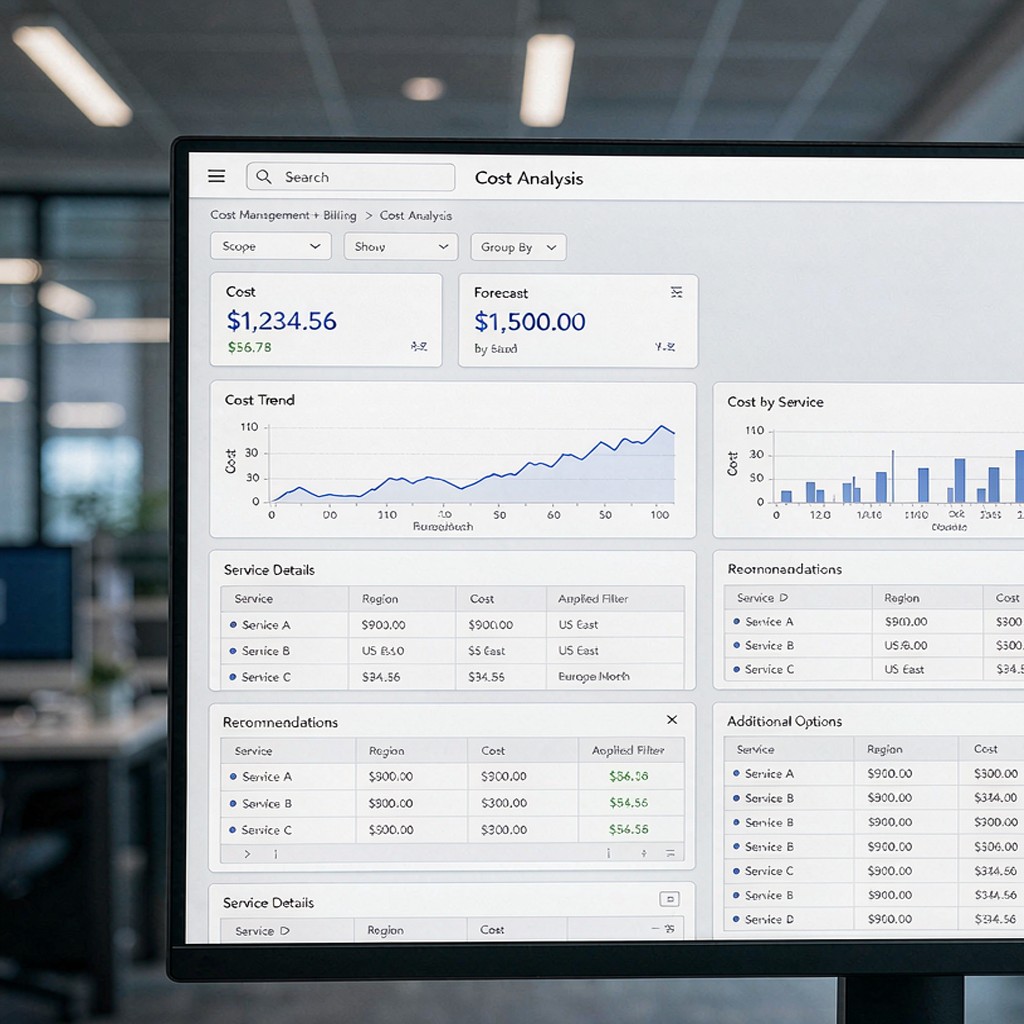
Phase 4 — Governance Setup (Week 6): Established budget alerts, spending limits, approval workflows for new resources, and automated reporting dashboards that show actual versus target spending by department and project.
The optimisation effort delivered immediate and sustained savings while improving the overall efficiency of the cloud environment:
The retail business now operates with sustainable cloud costs that scale appropriately with their business needs. Seasonal peaks are handled automatically through elastic scaling, while baseline operations run efficiently on reserved instances. They have the visibility and controls needed to manage future growth proactively rather than reactively.
"I honestly didn't know where all the money was going until we did this project. We cut our cloud bill by a third without touching any of our core business systems or affecting customer experience. That's incredible ROI."
Director, Style & Thread Retail Group